|
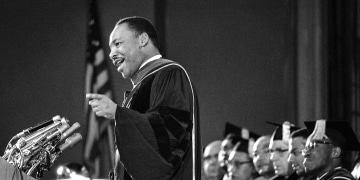
For five days in March of 1965, civil rights activists responded to weeks of violence and unrest by walking the 54 miles of Alabama highway from Selma to Alabamas state capitol of Montgomery. Led by Dr. Martin Luther King Jr., the march dramatized Alabamas discriminatory voter registration policies and focused national attention on a problem that extended far beyond Alabama. Selma was the site of three marches. The first was known as Bloody Sunday. On that day, Alabama state troopers attacked marchers with clubs and tear gas, injuring almost one hundred. The second march was called Turnaround Tuesday. It, too, was halted by state troopers, but Dr. King, to everyones surprise, turned the marchers around. It was the third march, held six days after Pres. Lyndon Johnson sent his voting rights proposal to Congress, that made the difference. It roused a nation and helped hasten passage of the legislation. On August 6, 1965, Dr. King witnessed Pres. Johnson sign the Voting Rights Act into law.
Veteran newsman, Richard Valeriani, looks back at the march to Montgomery. Text of Valeriani CHAT.
I put my hand on the back of my head and looked at it and it was full of blood. And one of the people came up to me and asked, Do you need a doctor? I said stunned, I think so, Im bleeding. And he thrust his face up to mine and said, We dont have doctors for people like you! |